
IHC–DFC: A Strategic Alliance to Channel Global Capital into Power Sectors
The strategic collaboration between International Holding Company (IHC) and the U.S. Development Finance Corporation highlights the rise of a new form of economic diplomacy, where investment flows serve as instruments of geopolitical influence across key global sectors.
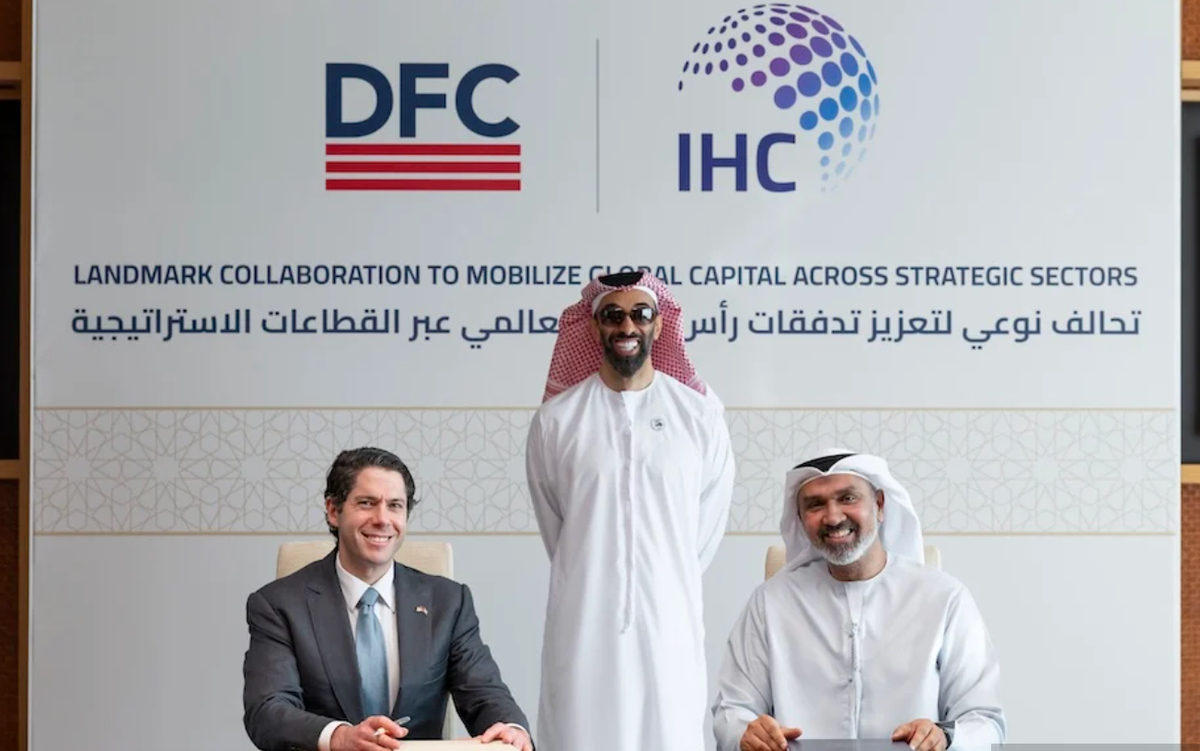
The strategic collaboration between International Holding Company (IHC) and the U.S. International Development Finance Corporation (DFC) marks a significant development at the crossroads of global finance, state-backed investment, and geopolitical positioning. Beyond a simple partnership, it signals a coordinated effort to direct capital toward sectors that increasingly define economic sovereignty and strategic influence.
Finance as a Tool of Long-Term Influence
Signed in Abu Dhabi, the framework agreement goes far beyond conventional co-investment mechanisms. It reflects a broader vision in which financial cooperation becomes a lever for shaping future economic landscapes. By aligning a major UAE-based investment powerhouse with the United States’ development finance arm, the initiative embeds capital flows within a long-term strategy of influence over key industries.
The collaboration provides for joint origination, structuring, and execution of investments across sectors considered critical to national resilience and global competitiveness: critical minerals, energy systems, digital infrastructure, logistics, healthcare, and agri-food supply chains. These domains are no longer viewed merely as growth opportunities, but as strategic assets within an increasingly fragmented global economy.
Capital Scale Meets Geostrategic Convergence
This partnership unfolds against a backdrop of intensifying competition between state-backed financial actors. Sovereign capital is now a defining force in global markets, and this framework reflects a convergence of interests between Abu Dhabi and Washington. For the UAE, it reinforces its role as a central hub for South–North capital circulation. For the United States, it represents a renewed effort to engage emerging markets through high-standard, transparent financing models.
Targeted projects will focus primarily on frontier and developing economies regions often underserved by traditional financial institutions but central to future growth and political alignment. These markets sit at the heart of trade corridors, energy routes, and digital connectivity networks that will shape tomorrow’s global order.
Securing Supply Chains and Strategic Technologies
At its core, the IHC–DFC framework responds to growing vulnerabilities in global supply chains and the accelerating race for technological control. From securing access to minerals essential for the energy transition to building digital infrastructure capable of supporting sovereign data ecosystems, the partnership seeks to reduce exposure to geopolitical shocks while maintaining commercial sustainability.
The establishment of a joint governance and decision-making structure allows capital to be deployed swiftly and strategically. It blends institutional efficiency with sovereign priorities, ensuring that investments deliver both developmental outcomes and long-term financial returns.
Investment as Economic Diplomacy
On the geopolitical stage, this collaboration illustrates a new model of economic diplomacy one in which investment vehicles act as instruments of soft power. Through infrastructure financingch development, technological platforms, and industrial partnerships, both countries extend their influence in emerging regions without direct political intervention.
Ultimately, the IHC–DFC alliance reinforces the UAE–U.S. bilateral relationship while positioning both actors as key architects of the Global South’s evolving economic framework. In an era where finance, security, and diplomacy are increasingly intertwined, this partnership exemplifies how capital itself has become a strategic asset.